


The Stranger Things finale doesn’t simply close a chapter—it pulls back the curtain on something deeply unsettling. Beneath the monsters, alternate dimensions, and supernatural chaos lies a powerful message about vulnerability, trauma, and how easily pain can be exploited.
When Stranger Things first premiered, it felt like a nostalgic sci-fi adventure filled with bikes, walkie-talkies, and otherworldly threats. But the series finale makes one thing unmistakably clear: this story was never just about another world.
It was always about this one.
The Stranger Things Finale Changes How We See the Entire Series
By the final moments, Stranger Things sheds its fantasy skin. The Upside Down stops feeling imaginary. Vecna stops feeling fictional.
What remains is an uncomfortably real truth: people who are emotionally exposed are the easiest to break.
The ending reframes the entire series, urging viewers to look beyond the horror elements and focus on the psychology beneath them. It’s no longer just about monsters—it’s about emotional wounds left untreated.
Vecna Was Never Choosing Random Victims
The finale confirms what the show has been quietly suggesting for years. Vecna doesn’t hunt strength.
He hunts pain.
His victims are people who are:
- Grieving in silence
- Carrying guilt
- Emotionally isolated
- Afraid to speak their truth
Vecna listens before he attacks. He understands before he controls.
The message is chilling: emotional vulnerability becomes a doorway when the wrong person is knocking.
The Upside Down Is a Mirror, Not Just a Place
In the finale, the Upside Down stops being just a parallel dimension. It becomes a reflection of unresolved trauma.
It grows through silence.
It spreads through unspoken pain.
It thrives when suffering is ignored.
This is what makes the Stranger Things ending linger long after the credits roll. The darkness doesn’t arrive suddenly—it’s built slowly, through everything left unsaid.
Why the Stranger Things Ending Feels So Personal
The finale doesn’t rely on shock value. It resonates.
Most viewers recognize the fear of being emotionally exposed—the fear that someone could see your weakest moments and use them against you.
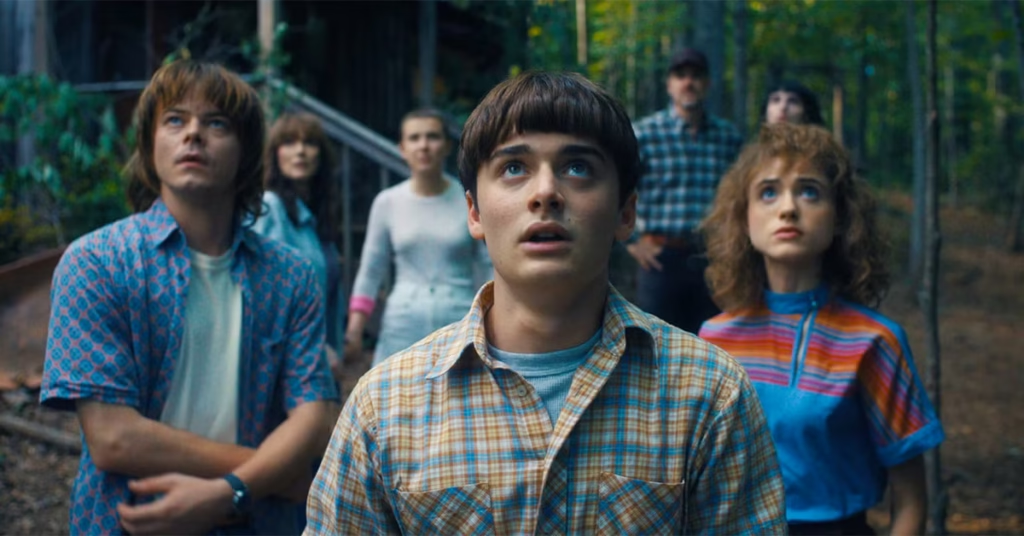
That’s why the ending hits so hard. It doesn’t overwhelm with spectacle. It connects through recognition.
What Stranger Things Ultimately Says About Strength
The series ends by redefining what strength truly means.
Strength isn’t silence.
It isn’t pretending to be okay.
It isn’t facing fear alone.
The characters who survive are the ones who share their pain. Friendship becomes protection. Honesty becomes resistance.
The final message is clear: isolation empowers darkness, but connection weakens it.
A Stranger Things Finale That Leaves a Warning, Not Closure
Stranger Things doesn’t end with everything fixed. Hawkins remains fractured. The future feels uncertain.
And that’s exactly why it works.
Because this was never just a fantasy about monsters. It was a story about emotional survival—about what happens when pain is ignored, and what happens when it’s faced together.
The monsters fade.
The message stays.