

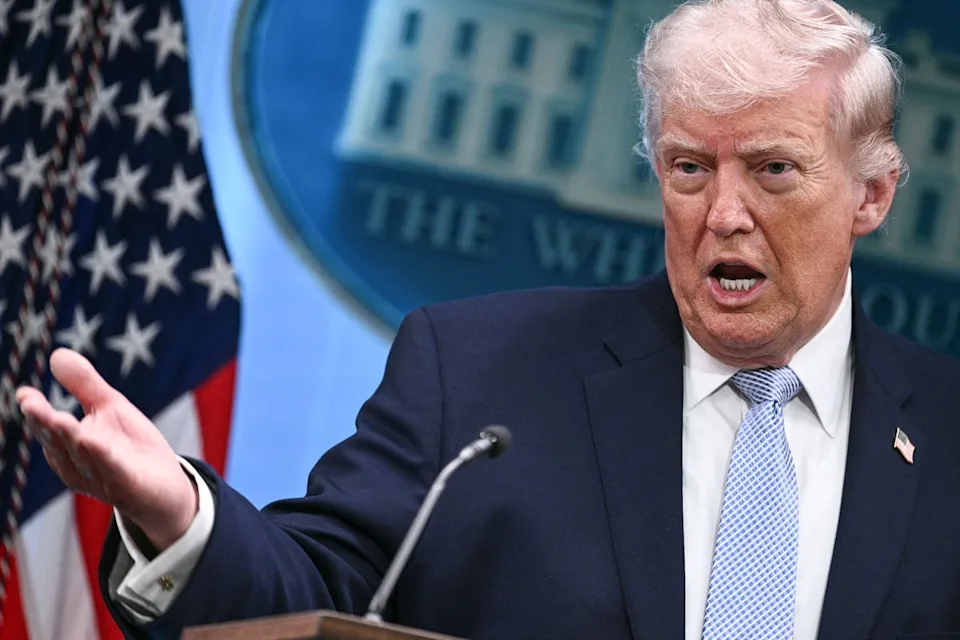
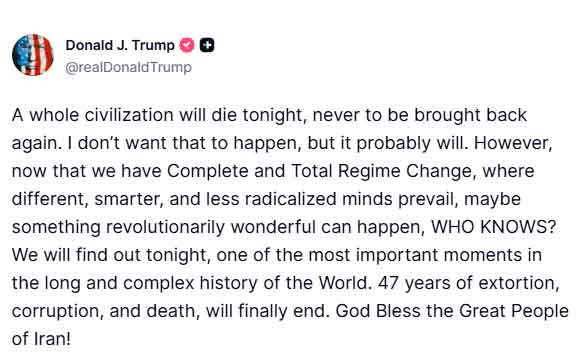
A recent post by Donald Trump on Truth Social has ignited intense debate after a legal expert suggested the statement could be interpreted as a threat of genocide.
The former U.S. president reportedly warned that “a whole civilization will die tonight” if Tehran failed to meet a negotiation deadline—remarks that have drawn sharp criticism and concern from legal and geopolitical analysts.
Legal Expert Raises Serious Concerns
Speaking to Reuters, Brian Finucane, a senior adviser at the International Crisis Group, said the language used in the post could carry grave implications.
“Trump’s threat that ‘a whole civilization will die tonight, never to be brought back again,’ could plausibly be interpreted as a threat to commit genocide,” Finucane stated.
Before joining the Crisis Group in 2021, Finucane served as a legal adviser at the U.S. Department of State, where he worked on issues related to the use of military force.
What Constitutes Genocide Under Law
Finucane explained that both international and U.S. law define genocide as acts committed with the intent to destroy, in whole or in part, a national, ethnic, racial, or religious group.
These acts include:
- Killing members of a group
- Causing serious bodily or mental harm
- Deliberately creating conditions aimed at physical destruction
- Preventing births within the group
- Forcibly transferring children to another group
His remarks highlight how rhetoric from political leaders can carry legal and ethical weight, particularly when referencing large-scale destruction.
Rising Tensions and Global Implications
The statement comes amid ongoing tensions between the United States and Iran, with negotiations reportedly at a sensitive stage. According to Finucane, such rhetoric may be intended to exert pressure—but it also carries significant risks.
He warned that escalating threats could lead to real-world consequences, including potential military action and retaliatory responses.
Concerns Over Escalation
Experts caution that strong language in geopolitical conflicts can rapidly intensify already fragile situations. The possibility of increased hostilities between Washington and Tehran raises concerns not only for regional stability but also for civilian populations.
Conclusion
The controversy surrounding Trump’s remarks underscores the power of political rhetoric in international relations. As debates continue, the focus remains on whether such statements are strategic pressure tactics—or signals of a deeper and more dangerous escalation.