

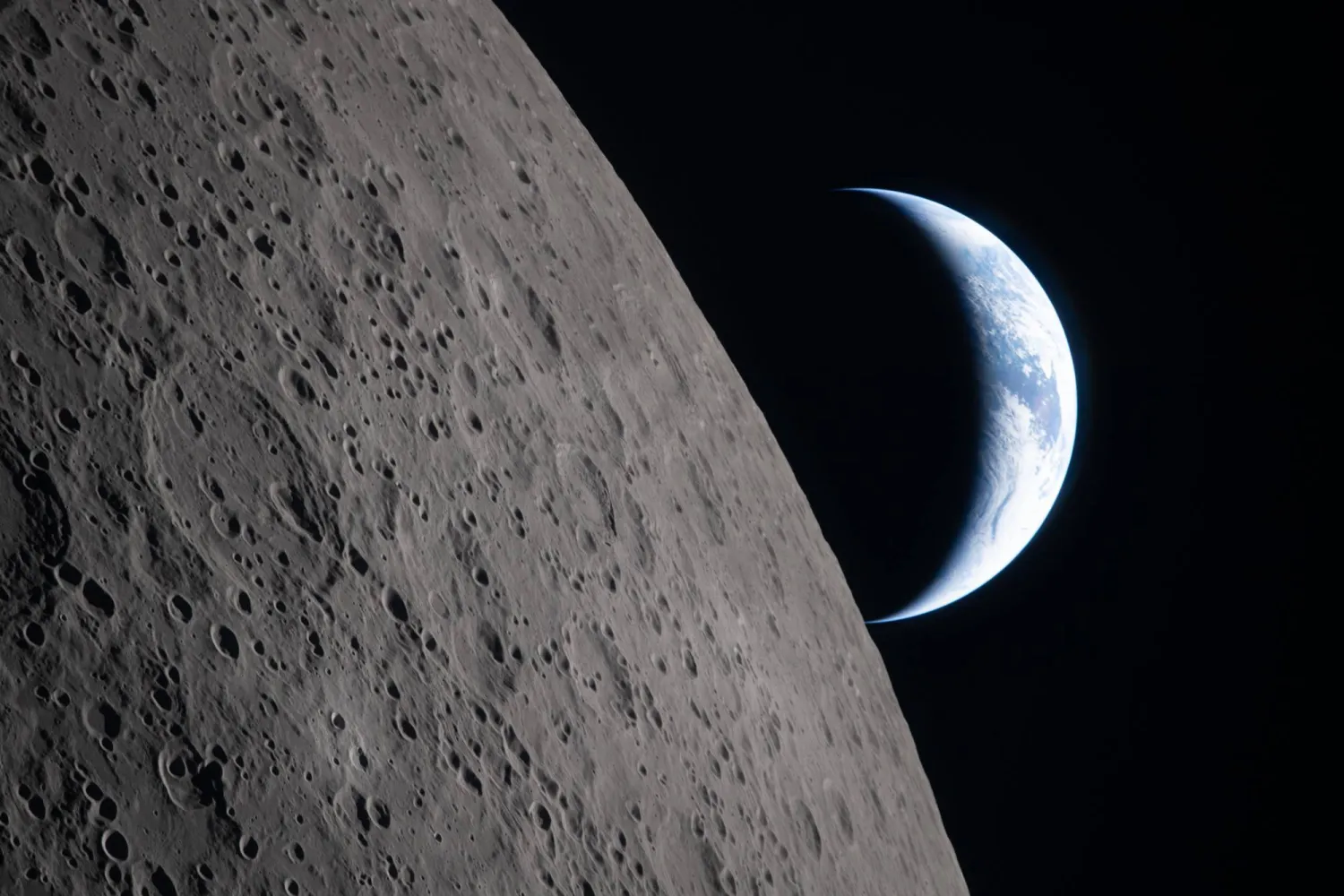
In a breathtaking moment during humanity’s return to deep space exploration, astronauts aboard Artemis II have reported witnessing something rarely seen in real time—meteorites striking the Moon’s surface.
The discovery has left scientists both surprised and excited, offering a unique glimpse into cosmic events that are usually only detected by instruments.
A Stunning Sight During Lunar Flyby
Mission commander Reid Wiseman and crew member Jeremy Hansen described seeing brief flashes—tiny bursts of light—scattered across the Moon’s rugged terrain.
These “pinpricks of light,” as Hansen called them, appeared suddenly and vanished just as quickly, lasting only milliseconds.
The fleeting nature of these flashes makes them incredibly difficult to capture, which is why direct human observation is so valuable.
Six Impacts in Just Hours
During a seven-hour observation window, the crew documented six separate meteorite impacts.
For scientists, that number alone is remarkable.
Experts didn’t expect astronauts to witness even a single impact during the mission, making the multiple sightings a major scientific bonus.
Scientists Caught Off Guard
Lunar science lead Kelsey Young admitted the moment was completely unexpected.
The reaction from mission control reflected that surprise, with teams in Houston reportedly celebrating as the data came in.
Backup astronaut Jenni Gibbons also emphasized how rare these observations are, calling them a top scientific priority for the mission.
What Exactly Did They See?
According to Wiseman, the flashes appeared as bright white to bluish-white bursts—similar to the speed of a camera shutter opening and closing.
These flashes occur when small meteorites collide with the Moon’s surface at extremely high speeds, releasing bursts of energy visible as light.
Because the Moon lacks a thick atmosphere, even tiny space rocks can hit the surface directly, creating these luminous impacts.
Why This Discovery Matters
Scientists are now working to match the astronauts’ observations with data from orbiting lunar satellites.
This cross-verification is crucial. It helps researchers:
- Improve the accuracy of remote sensing technology
- Better understand how often meteorites strike the Moon
- Track the “daily flux” of space debris in Earth’s neighborhood
According to Bruce Betts, analyzing the brightness and duration of these flashes will allow scientists to estimate the size and frequency of incoming objects.
A New Era of Space Observation
The event highlights something powerful—human eyes still play a critical role in space exploration.
While satellites and instruments provide constant monitoring, astronauts can notice patterns and anomalies in real time, adding a layer of insight technology alone cannot fully replicate.
What Comes Next?
As data continues to be analyzed, these observations could reshape how scientists understand lunar impacts and space debris activity.
And with future Artemis missions planned, this may be just the beginning of even more groundbreaking discoveries.
One thing is certain: the Moon still has surprises—and we’re only just starting to see them.