

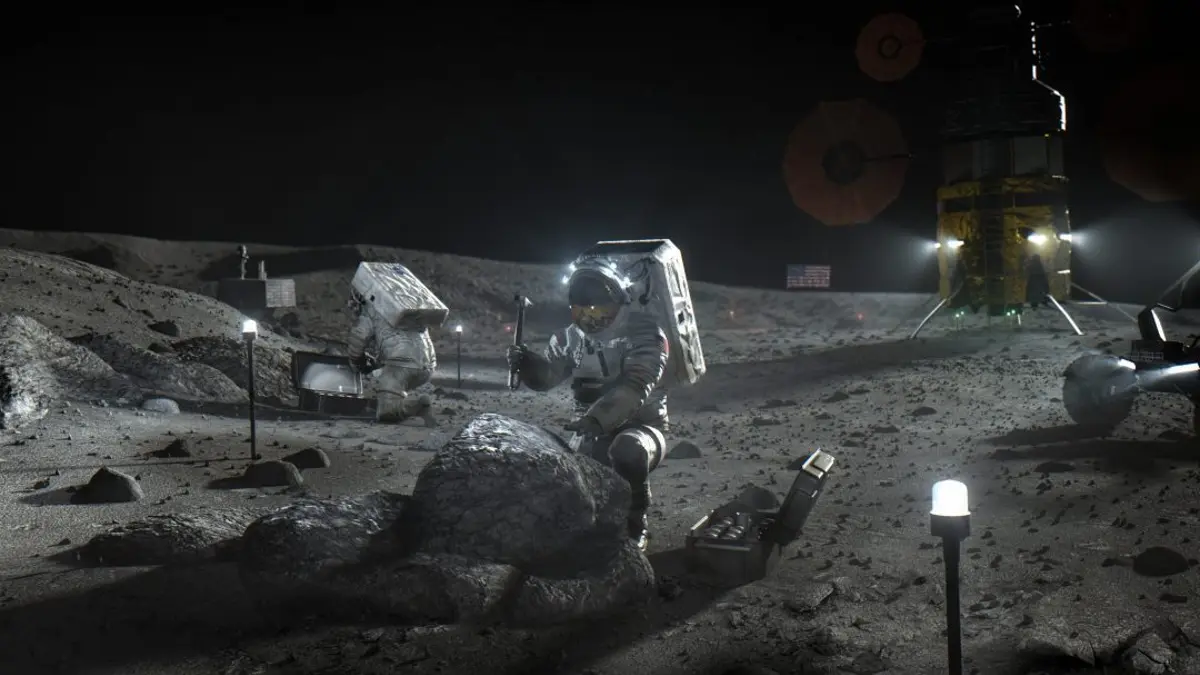
For more than 50 years, the Moon has remained a silent relic of human ambition—marked by footprints, abandoned equipment, and the legacy of the Apollo program.
But that silence is now being broken.
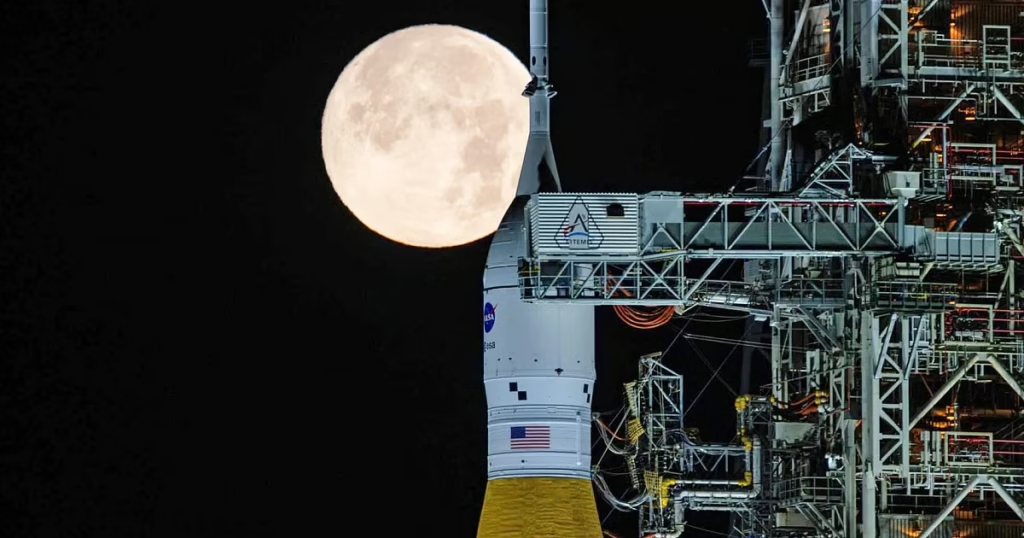
With the launch of Artemis II on April 1, a new chapter in space exploration has begun—one that experts say could lead to humans actually living on the Moon.
From Exploration to Occupation
Unlike past missions, Artemis isn’t just about visiting the Moon—it’s about staying.
Astronomer and physicist Shaheer Niazi explains that after the Apollo era, lunar exploration came to a standstill. Only a dozen astronauts ever walked on its surface, and for decades, the Moon remained untouched.
Now, that mindset is shifting dramatically.
The Moon is no longer just a destination—it’s being reimagined as a future home for humanity.
Why Artemis II Is So Important
Artemis II marks the first crewed mission in NASA’s new lunar program, following the success of Artemis I.
This mission focuses on:
- Testing life-support systems
- Evaluating deep-space navigation
- Studying astronaut performance beyond Earth orbit
While Artemis II will orbit the Moon rather than land, it lays the groundwork for future missions that will take a much bigger step—putting humans back on the lunar surface.
The South Pole: The Moon’s Most Valuable Real Estate
The real target isn’t just the Moon—it’s a specific region.
Scientists are focusing heavily on the lunar South Pole, believed to contain frozen water and other vital resources.
This area is critical because:
- Water ice can support human life
- Hydrogen can be converted into fuel
- Near-constant sunlight provides sustainable energy
These factors make the South Pole the most viable location for a long-term human base.
A New Space Race Is Already Underway
The stakes are rising fast.
While the United States pushes forward with Artemis, China has announced plans to send its own crewed mission to the Moon by 2030. The country has already achieved a historic milestone by landing rovers on the far side of the Moon—something no other nation had done before.
This growing competition has sparked comparisons to a modern-day space race.
However, unlike the Cold War era, today’s efforts blend rivalry with collaboration.
Global Partnerships and Future Tech
NASA isn’t working alone.
International partnerships—including contributions from JAXA—are helping develop next-generation lunar technology.
One of the most intriguing projects? A futuristic lunar vehicle designed to help astronauts travel across the Moon’s surface.
Yes—if plans go ahead, even companies like Toyota could play a role in building transportation systems for the Moon.
From Missions to Settlements
The long-term vision is ambitious.
According to experts, the Artemis program is aiming to establish:
- A permanent human presence on the Moon by around 2030
- A fully operational lunar base by 2040
This marks a major shift from the Apollo era, which focused on short-term missions. Artemis, by contrast, is a long-term strategy for sustained space living.
The Bigger Picture
This isn’t just about science—it’s about the future of humanity.
As Earth faces growing challenges, the Moon could become a stepping stone for deeper space exploration—and possibly even a backup for human civilization.
So, Are We Really Moving to the Moon?
It may sound like science fiction, but the groundwork is already being laid.
With Artemis II leading the way, the idea of living on the Moon is no longer a distant dream—it’s an active mission.
And this time, humanity isn’t just planting flags.
We’re preparing to stay.