

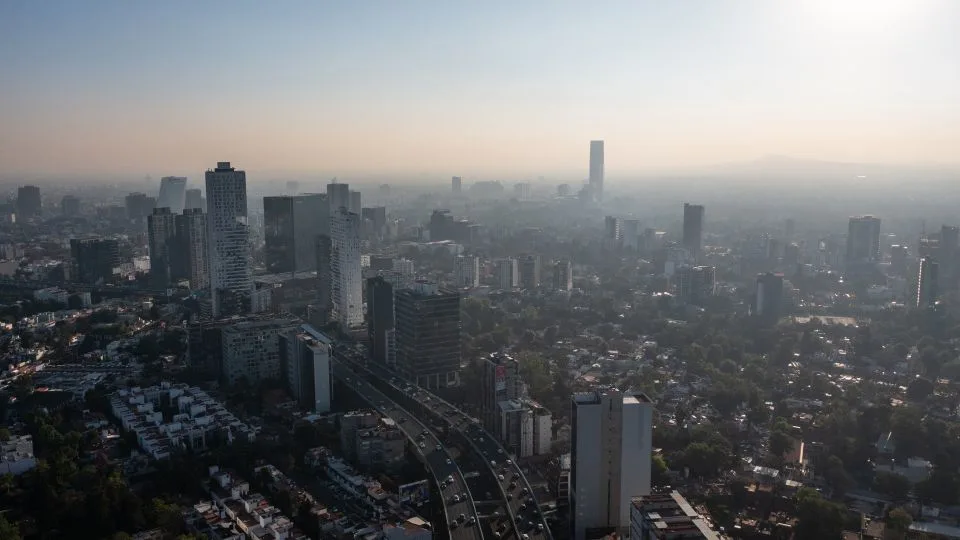
MEXICO CITY — New satellite data from a joint mission by NASA and the Indian Space Research Organisation has revealed that Mexico City is sinking at a faster rate than previously understood, with some areas subsiding by nearly 10 inches per year.
The findings come from the NISAR (NASA-ISRO Synthetic Aperture Radar) satellite, which tracked ground movement across the city between late 2025 and early 2026.
Satellite data reveals rapid subsidence
According to the data, certain parts of the Mexican capital are sinking at an average rate of about 0.8 inches per month.
Scientists attribute the phenomenon primarily to excessive groundwater extraction combined with rapid urban expansion.
David Bekaert, a scientist associated with the NISAR mission, described Mexico City as a “well-known hotspot” for subsidence, noting that the latest imagery offers only an early glimpse into the satellite’s capabilities.
Why Mexico City is sinking
Mexico City sits atop an ancient lakebed and relies heavily on underground aquifers for its water supply, which provide a significant portion of the city’s drinking water.
Decades of over-pumping have weakened the ground beneath the city, causing it to compress and sink over time—a process known as land subsidence.
Infrastructure under pressure
The effects are already visible across the city.
Roads have cracked, buildings have tilted, and critical infrastructure is under increasing strain. Areas near Benito Juárez International Airport are among the most severely affected.
Even iconic landmarks such as the Angel of Independence have required structural adjustments over time, including additional steps to compensate for sinking ground levels.
A growing global concern
Experts warn that Mexico City’s situation highlights a broader global issue affecting urban areas built on soft soil or dependent on groundwater extraction.
With NISAR expected to deliver more high-resolution Earth observation data, scientists anticipate identifying similar risks in other major cities worldwide.
What comes next
While solutions such as reducing groundwater use and improving water management systems are being explored, reversing subsidence remains extremely difficult.
The latest findings underscore the urgency of sustainable urban planning as cities face increasing environmental and structural challenges.