

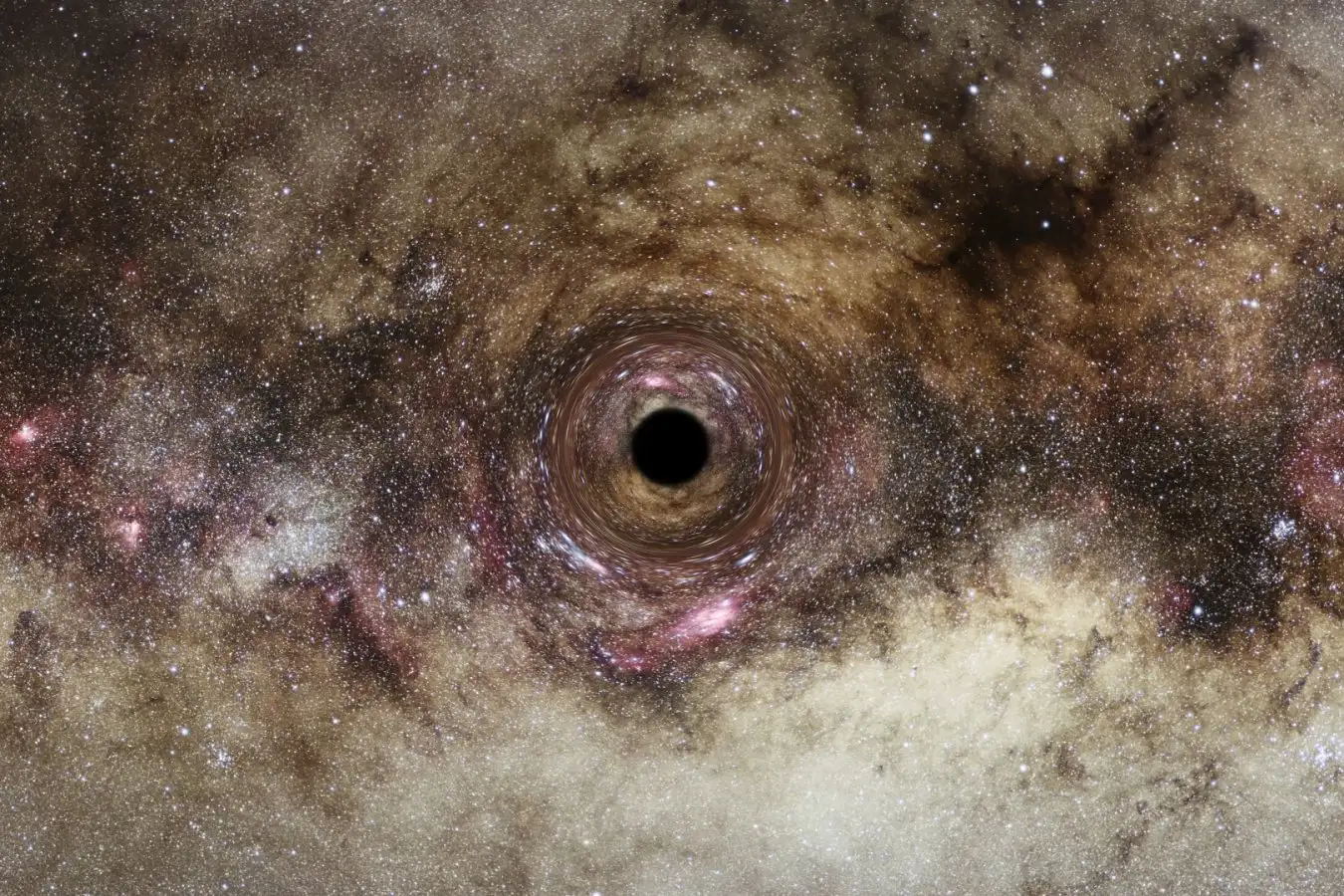
Scientists may be closer than ever to confirming one of the universe’s oldest mysteries—the existence of primordial black holes.
Unlike conventional black holes formed from collapsing stars, these hypothetical objects are believed to have originated moments after the Big Bang, emerging from dense pockets of matter in the early universe.
What Are Primordial Black Holes?
Primordial black holes (PBHs) differ significantly from typical black holes created by supernova explosions.
While most known black holes have masses several times larger than the Sun, PBHs are expected to be much smaller—possibly even less than a single solar mass.
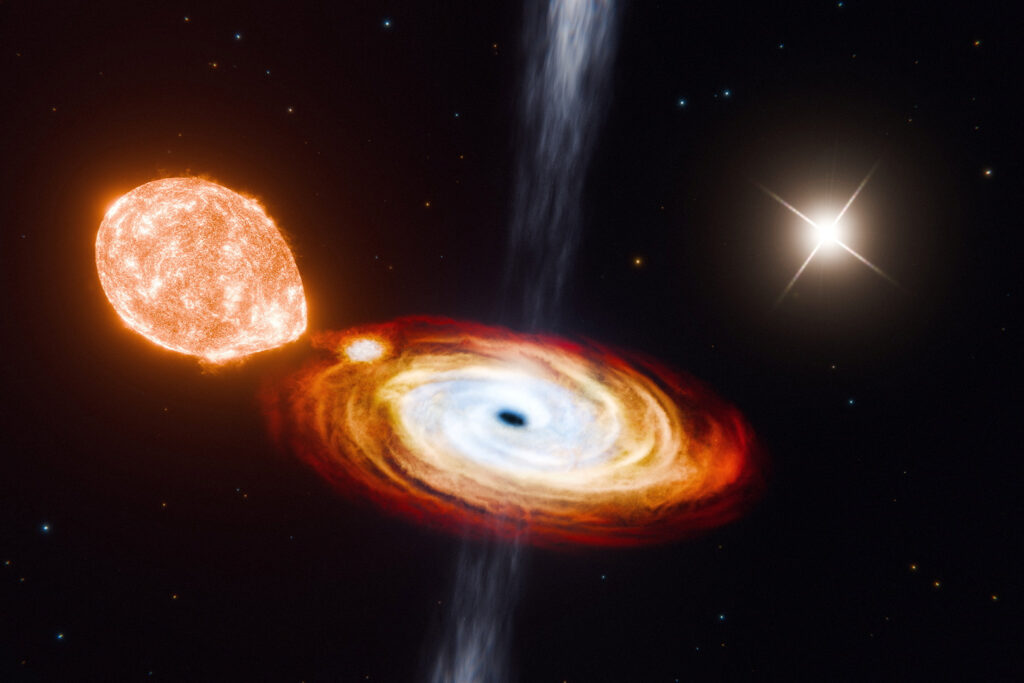
For decades, they have remained purely theoretical. However, new research suggests they may soon move into the realm of observable science.
Breakthrough Signal Detected by LIGO
A team of astrophysicists, including Alberto Magaraggia and Nico Cappelluti from the University of Miami, used data from the LIGO (Laser Interferometer Gravitational-Wave Observatory) to investigate unusual signals.
LIGO, with facilities in Louisiana and Washington, is designed to detect gravitational waves—ripples in space-time caused by massive cosmic events like black hole collisions.
The researchers identified a signal known as S251112cm, which appears to show a collision between two objects—one of which may have a subsolar mass, making it a potential primordial black hole.
Why This Discovery Matters
Traditional black holes form from dying stars and typically have masses ranging from several times that of the Sun to billions of solar masses.
Primordial black holes, however, are expected to be much smaller and could provide insights into:
- The early universe
- Dark matter composition
- The evolution of cosmic structures
“We believe our study will aid in confirming that [PBHs] actually do exist,” Cappelluti noted.
More Evidence Still Needed
Despite the exciting findings, scientists caution that further analysis is required.
The signal must undergo deeper study to confirm whether the object truly qualifies as a primordial black hole or represents another rare astrophysical phenomenon.
New Research Explores ‘PBH Protoatoms’
In a separate 2026 study, Elio Quiroga introduced the concept of “PBH-H protoatoms”—exotic systems where a primordial black hole acts like a nucleus, capturing a proton and an electron.
These unusual formations could produce unique signatures detectable by the James Webb Space Telescope (JWST), particularly in the far-infrared spectrum.
A Step Closer to Solving a Cosmic Mystery
If confirmed, primordial black holes could reshape our understanding of the universe’s origins and composition.
From gravitational wave detections to advanced telescope observations, scientists are now closer than ever to unlocking a mystery that has persisted since the dawn of time.