

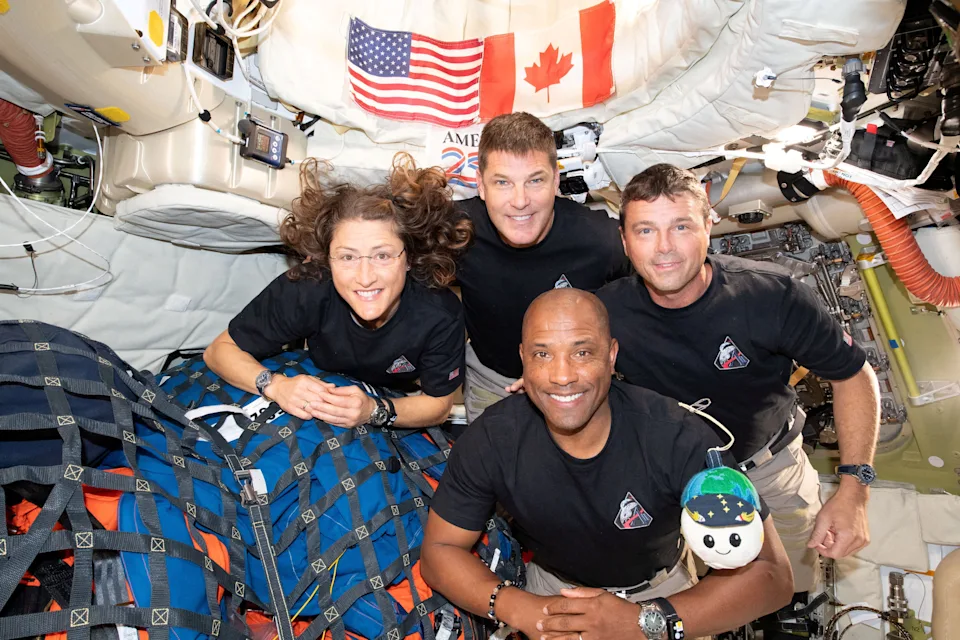
The crew of Artemis II is set to make a high-speed return to Earth, with NASA detailing the precise and complex sequence required for a safe splashdown.
The mission’s Orion capsule is expected to re-enter Earth’s atmosphere at speeds nearing 24,000 mph before descending into the Pacific Ocean near San Diego.
Precision Is Critical During Re-Entry
NASA officials have emphasized that even the smallest miscalculation during re-entry could jeopardize the mission.
Associate administrator Amit Kshatriya highlighted the importance of the engineering effort behind the mission, while flight director Jeff Radigan stressed that the spacecraft must hit an exact entry angle to ensure a safe descent.
A brief communications blackout is also expected as the capsule passes through the most intense phase of atmospheric re-entry.
Step-by-Step Splashdown Sequence
The return process involves several carefully timed steps:
- Separation of the service module, which will burn up in the atmosphere
- Deployment of parachutes to slow the capsule
- Splashdown in the Pacific Ocean at approximately 5:07 PM PT
These stages are critical to ensuring the safety of the astronauts onboard.
Recovery Operations Underway
Following splashdown, recovery teams aboard the USS John P. Murtha will begin operations to retrieve the crew.
The process is expected to take around 90 minutes, after which the astronauts will be transported to Houston for medical evaluations.
Officials have also warned the public to avoid the designated recovery zone due to potential falling debris.
Mission Data a Key Priority
Astronaut Victor Glover emphasized the importance of the mission’s return, noting that valuable data and insights collected during the journey will be brought back to Earth.
From scientific observations to visual documentation, the mission promises to deliver critical information that will shape future space exploration efforts.
A Defining Moment for NASA
As Artemis II approaches its final phase, all eyes are on the success of the re-entry and recovery.
The outcome will not only mark a major milestone for NASA but also pave the way for future missions aimed at returning humans to the Moon and beyond.