


NASA’s ambitious return to deep space has taken a major step forward as the Artemis II crew successfully entered high-Earth orbit following a powerful launch from Florida.
The mission lifted off from Kennedy Space Center aboard the Space Launch System, marking one of the most significant milestones in modern human spaceflight.
A Powerful Start to a Historic Mission
The launch took place in the evening, sending the crew aboard the Orion spacecraft into orbit. Since then, astronauts have been carrying out critical maneuvers to adjust the spacecraft’s trajectory, including raising its perigee in preparation for the next phase.
This step is essential before executing the translunar injection burn—the engine firing that will propel the spacecraft toward the moon.
Meet the Trailblazing Crew
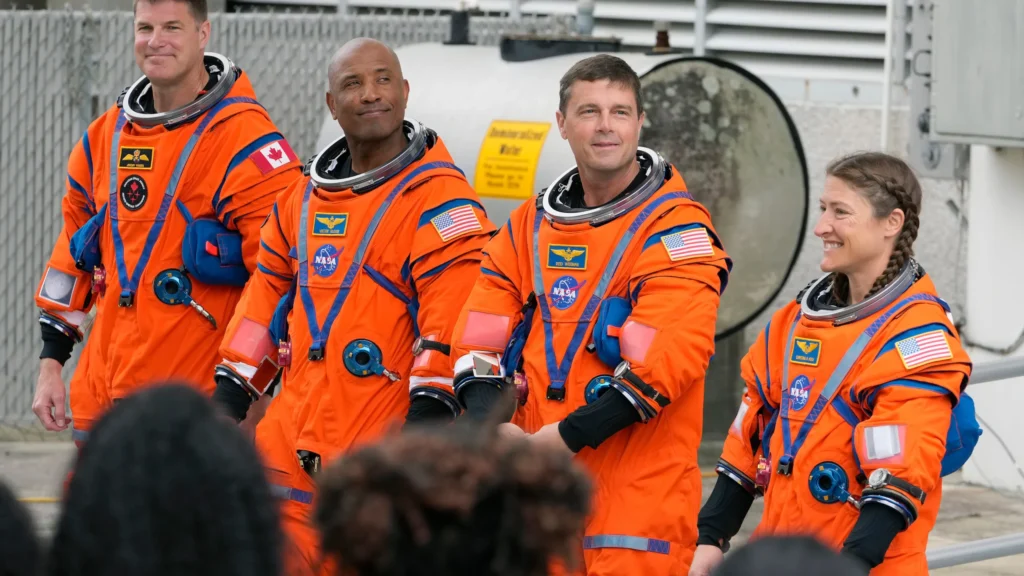
The four-member crew represents a diverse and historic lineup of astronauts:
- Reid Wiseman
- Christina Koch
- Victor Glover
- Jeremy Hansen
This mission marks several groundbreaking firsts. Glover becomes the first Black man to travel toward the moon, Koch the first woman on such a mission, and Hansen the first Canadian to venture into deep space beyond Earth orbit.
A Journey Beyond Previous Limits
If all goes according to plan, the crew will embark on a four-day journey toward the moon, aiming for a lunar flyby in the coming days. The mission is expected to push human spaceflight farther than ever before.
Astronauts aboard Artemis II are set to surpass the distance record established during the Apollo 13 mission, when humans traveled approximately 248,655 miles from Earth.
Why Artemis II Matters
This 10-day mission is more than just a test flight—it’s a crucial step in NASA’s broader goal of returning humans to the lunar surface for the first time in decades.
Data collected during this mission will help refine systems, ensure astronaut safety, and pave the way for future lunar landings, potentially as early as 2028.
The Road Back to the Moon
Artemis II is part of NASA’s long-term vision to establish a sustainable human presence on and around the moon. The mission not only revives human exploration beyond low-Earth orbit but also lays the groundwork for future missions to Mars.
As the crew continues their journey, the world watches closely, marking what could be the beginning of a new era in space exploration.