

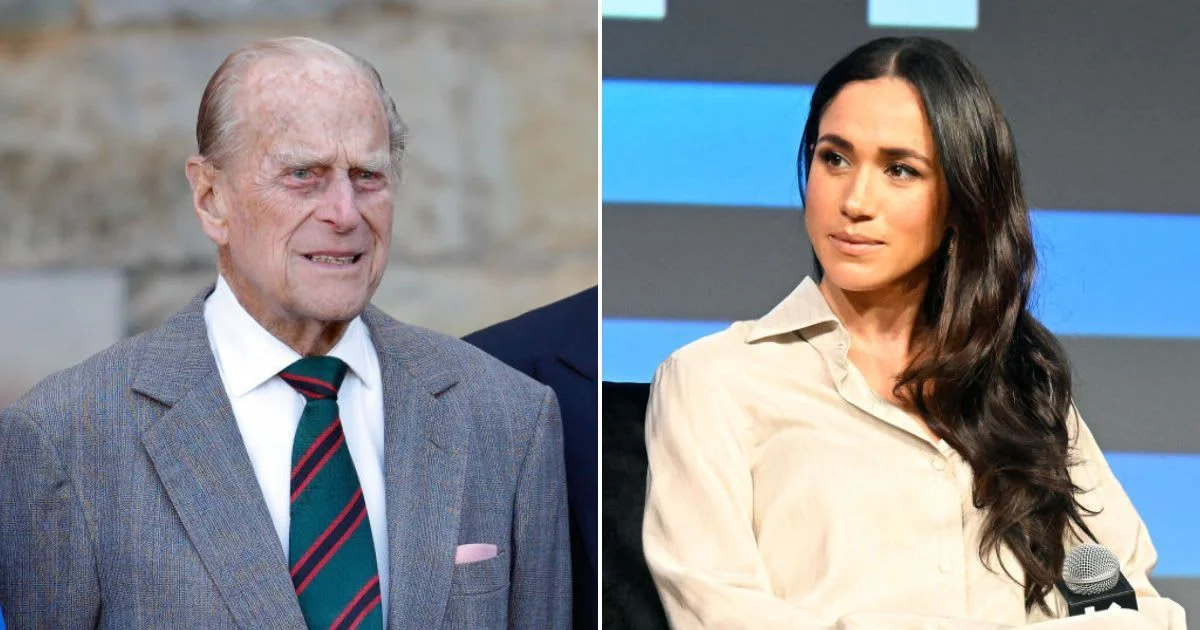
Reports about tensions within the British royal family have resurfaced, with claims that Prince Philip had a rather pointed way of referring to his grandson’s wife, Meghan Markle.
According to royal author Hugo Vickers, the late Duke of Edinburgh allegedly referred to Meghan as “The American,” a label that has since sparked fresh discussions about his views on her role within the monarchy.
Prince Philip, who attended Meghan and Prince Harry’s 2018 wedding at St George’s Chapel, was said to have drawn comparisons between Meghan and another controversial royal figure—Wallis Simpson.
Comparisons to Wallis Simpson
Royal author Ingrid Seward shed more light on the alleged similarities Prince Philip observed. She explained that the comparison went beyond surface-level traits.
“He wasn’t simply referring to the fact that both were pencil-slim, dark-haired and glamorous American divorcees,” Seward noted.
Instead, she suggested that Prince Philip saw deeper parallels between Meghan and Harry’s relationship and that of King Edward VIII and Wallis Simpson—whose romance led to one of the most dramatic moments in royal history.
A “Canny” Observer of People
Seward emphasized that Prince Philip was known for his sharp judgment of character.
“I think Prince Philip was very canny about people,” she said, adding that he often tried to see the good in others rather than focusing solely on their flaws.
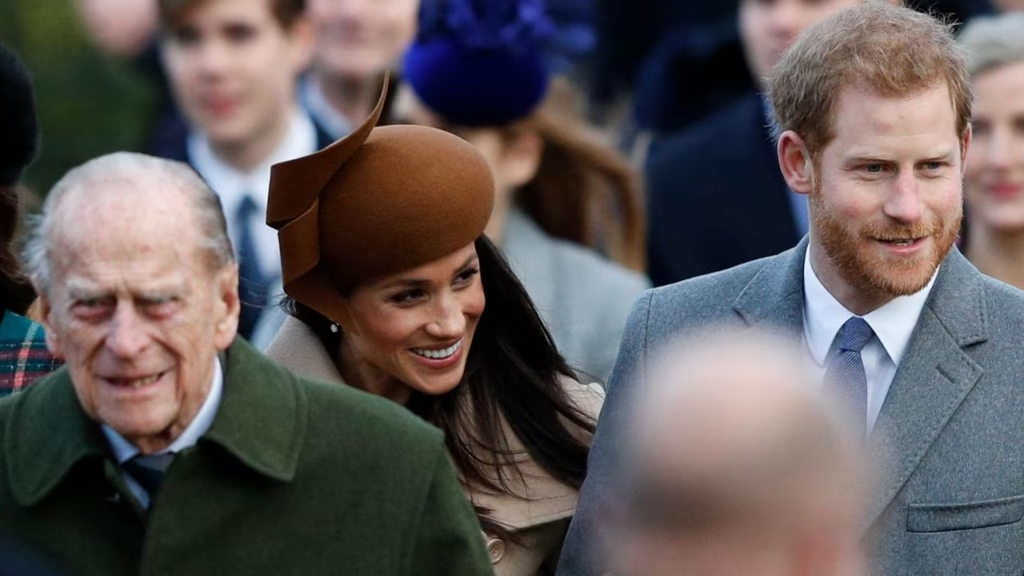
However, despite this outlook, the historical echoes between the two couples reportedly stood out to him.
“There are so many similarities,” Seward explained, noting that this perspective is why he allegedly referred to Meghan as “the Duchess of Windsor”—though not directly to her face.
Renewed Debate Around Royal Dynamics
These revelations have reignited conversations about longstanding tensions within the royal family, particularly following Meghan Markle and Prince Harry’s decision to step back from royal duties.
While such claims remain part of royal commentary rather than confirmed statements from Buckingham Palace, they continue to shape public perception of internal dynamics within the monarchy.
As interest in the Sussexes and their relationship with the royal family remains high, stories like these highlight how historical comparisons and personal opinions can continue to influence the narrative years later.