

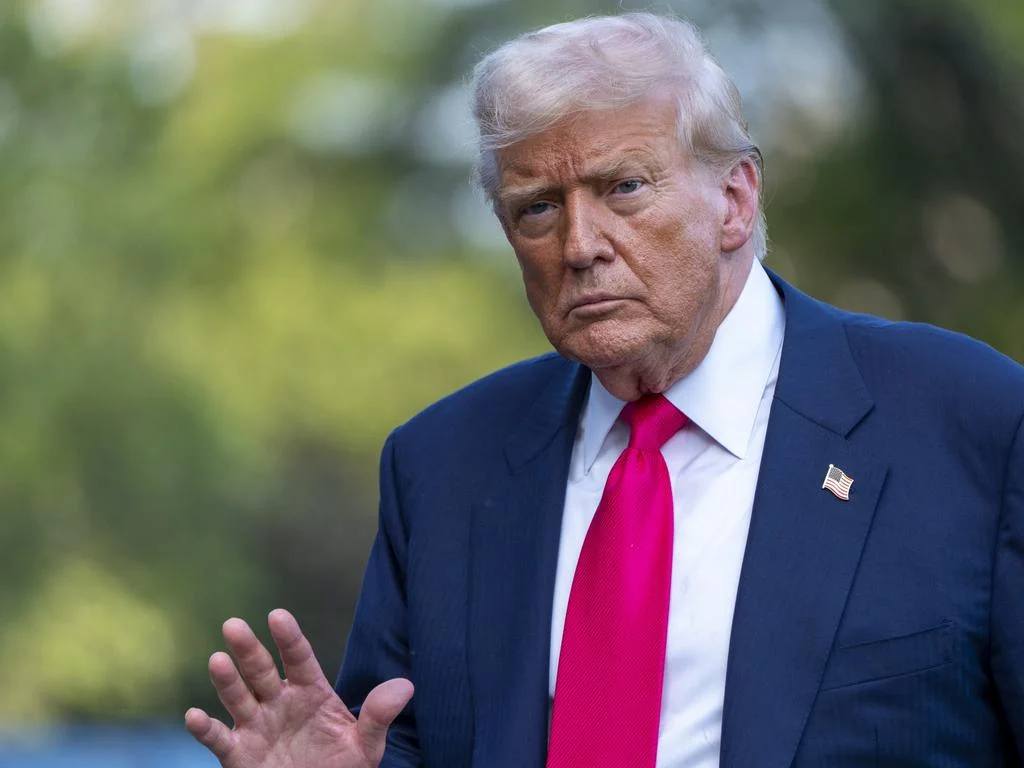
WASHINGTON, D.C. – U.S. President Donald Trump has launched a bold initiative aimed at reclaiming American leadership in the global artificial intelligence race, positioning the United States to outcompete China in the coming decade.
Trump introduced the “America’s AI Action Plan” in Washington, a sweeping strategy designed to accelerate AI development by reducing regulations, streamlining infrastructure projects, and fostering international influence in technology governance.
A New Space Race for the Digital Era
Framing the initiative as a modern-day space race, Trump emphasized that the U.S. must dominate artificial intelligence just as it once led space exploration in the 20th century.
“America is the country that started the AI race, and I’m declaring today that we are going to win it,” Trump said at the launch event.
He signed several executive orders to enforce key parts of the plan, which spans more than 90 proposals across federal agencies.
Key Pillars of Trump’s AI Strategy
The 25-page AI blueprint focuses on three central pillars:
- Accelerating Innovation: Encouraging private-sector breakthroughs through deregulation and investment.
- Building Infrastructure: Fast-tracking the development of data centers and energy sources, including coal and nuclear plants.
- Global Leadership: Strengthening U.S. influence in international AI policy bodies and expanding exports of American tech.
Trump’s administration argues that minimizing government red tape is essential to maintain economic and military superiority in the AI era. Agencies are being directed to rescind or override state-level AI laws, pushing for a unified national standard instead of a patchwork of local regulations.
Controversial Elements and Industry Reactions
The proposal quickly sparked debate over its implications for civil rights, environmental protections, and intellectual property.
- The American Civil Liberties Union (ACLU) warned that stripping states of regulatory authority could undermine safeguards against biased AI systems used in hiring, policing, and education.
- Critics also blasted the plan’s disregard for environmental reviews, as Trump seeks to exempt data center construction from typical green assessments and promote the use of federal lands for AI infrastructure.
- Trump also demanded that AI companies doing business with the government must avoid “ideological bias”and refrain from promoting diversity, equity, and inclusion (DEI) initiatives—labeling them as “social engineering agendas.”
On the legal front, Trump proposed shielding AI developers from copyright lawsuits, arguing that restricting access to online data and media limits innovation.
“You can’t be expected to build a successful AI system if you have to pay for every article or book you analyze,” he said.
Geopolitical Focus: Countering China
A major thrust of the plan is aimed at curbing China’s growing influence in international AI governance. The administration intends to tighten export controls on advanced chips and computing technologies, while simultaneously promoting U.S. tech dominance in foreign markets.
Secretary of State Marco Rubio added, “These policies ensure that American innovation remains the global gold standard, and that the world continues to run on U.S. technology.”
Critics: A “Gilded Age” for Big Tech?
Environmental advocates and watchdog groups argue that Trump’s AI vision disproportionately favors major tech corporations.
“This plan reads like a Gilded Age fantasy—handing over the keys to Silicon Valley while sidelining climate protections and civil rights,” said Jean Su of the Center for Biological Diversity.
Still, supporters view the strategy as a powerful step toward reclaiming U.S. technological supremacy in a critical field, one that will shape economic security, military defense, and global influence in the years ahead.