

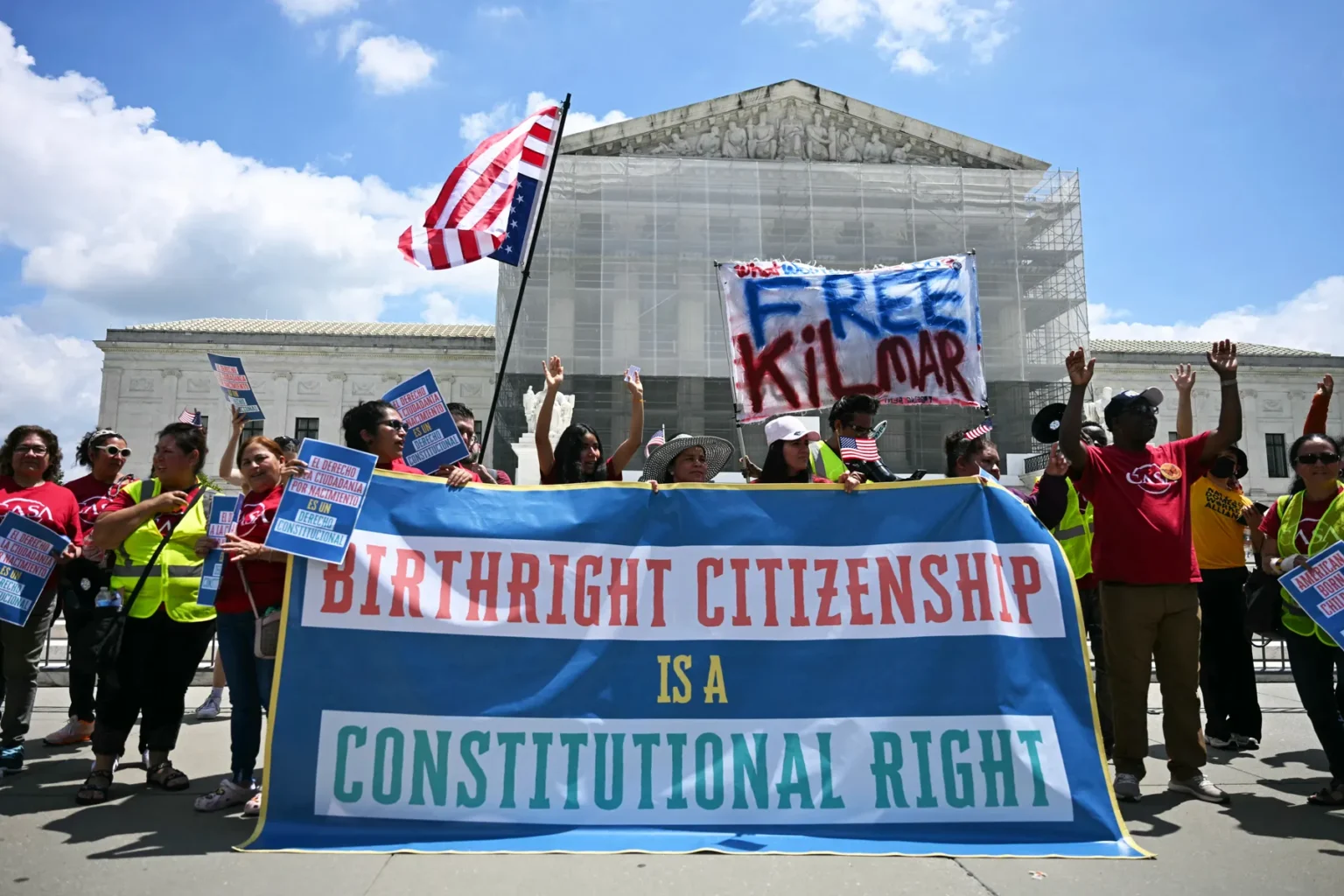
A new nationwide survey suggests strong public resistance to ending automatic citizenship for children born in the United States, as a major legal battle over the policy heads toward a landmark ruling.
A recent Reuters / Ipsos poll found that most Americans continue to support the principle of birthright citizenship, even as the issue reaches the highest court in the country.
Public Support for Birthright Citizenship Holds Strong
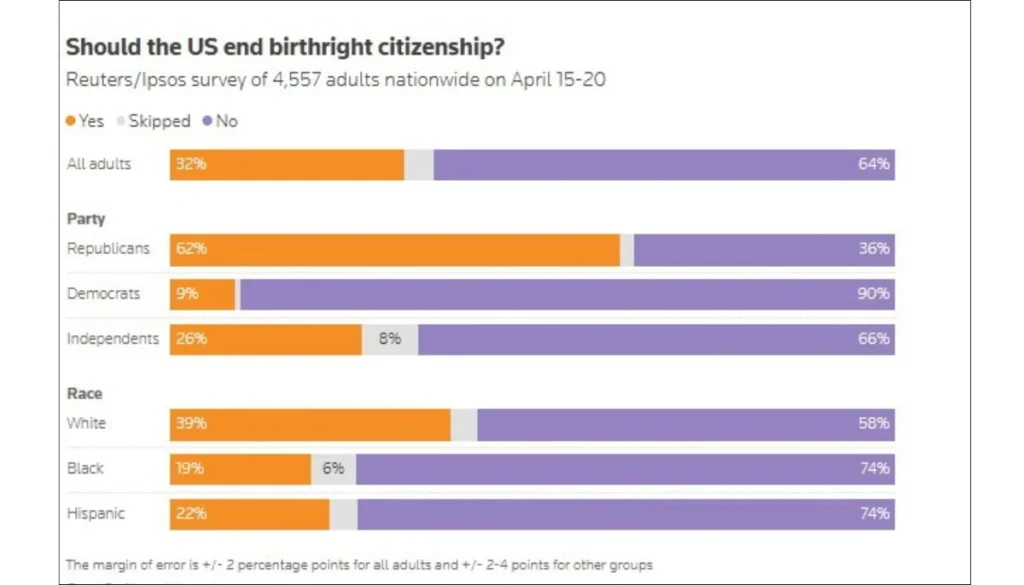
According to the survey conducted between April 15 and April 20, around 64% of Americans oppose efforts to end birthright citizenship. Meanwhile, 32% said they support ending the policy introduced in the U.S. Constitution’s interpretation and now at the center of political debate.
The findings highlight a clear divide in public opinion, particularly along party lines.
Political Divide Over Immigration Policy
The poll shows sharp differences between political groups. A large majority of Democrats strongly oppose ending birthright citizenship, while Republicans are more divided, with most supporting the policy change but a significant minority disagreeing.
The debate has intensified following former President Donald Trump’s 2025 executive order aimed at restricting the practice.
Supreme Court Set for Landmark Decision
The issue is now before the Supreme Court of the United States, which is expected to issue a ruling in the coming weeks.
The court’s decision could have wide-reaching consequences for immigration law and may become one of the most closely watched rulings of the year, shaping both legal precedent and political debate ahead of future elections.
Broader Legal and Political Context
The Supreme Court, which holds a conservative majority, has recently been involved in several high-profile rulings affecting civil rights, immigration policy, and federal authority.
This upcoming decision on birthright citizenship is expected to further influence discussions around national identity, immigration reform, and constitutional interpretation.
A Divided National Debate
While legal experts continue to debate the constitutional implications, the public remains broadly supportive of maintaining current citizenship rules. However, deep political divisions suggest the issue will remain contentious regardless of the court’s final ruling.