


We acknowledge the significance of your online privacy and acknowledge that granting us permission to collect some personal information requires a great deal of trust. We seek this consent as it enables Distinct Post to offer a platform that amplifies the voices of the marginalized. By using this site, you agree to the Privacy Policy and Terms of Use.
Accept
Distinct PostDistinct Post
Aa
  • Home
  • Israel-Gaza Conflict
  • World
  • Entertainment
  • Style
  • Health
  • Sports
  • Business
  • Royals
Reading: Alzheimer’s “Breakthrough” Drugs Face Fresh Doubts Over Real-World Benefits, New Review Finds
Share
Aa
Distinct PostDistinct Post
  • Home
  • Israel-Gaza Conflict
  • World
  • Entertainment
  • Style
  • Health
  • Sports
  • Business
  • Royals
Search
  • Home
  • Israel-Gaza Conflict
  • World
  • Entertainment
  • Style
  • Health
  • Sports
  • Business
  • Royals
Follow US
Distinct Post > Health > Alzheimer’s “Breakthrough” Drugs Face Fresh Doubts Over Real-World Benefits, New Review Finds
Health

Alzheimer’s “Breakthrough” Drugs Face Fresh Doubts Over Real-World Benefits, New Review Finds

Henry Ortiz Published April 23, 2026
SHARE

A newly published review has raised concerns about the real-world effectiveness of so-called breakthrough treatments for Alzheimer’s disease, suggesting that their clinical benefits for patients may be limited.

Contents
Limited Real-World BenefitDebate Over Medical ProgressSafety and Cost ConcernsExpert Views DividedBackground on the TreatmentsOngoing Debate

The findings, reported by the BBC, focus on a group of drugs designed to target and remove amyloid plaques in the brain—a key feature of Alzheimer’s disease.

Limited Real-World Benefit

Researchers argue that while these drugs can reduce amyloid build-up or slightly slow cognitive decline, the overall improvement in patients’ daily lives may be minimal.
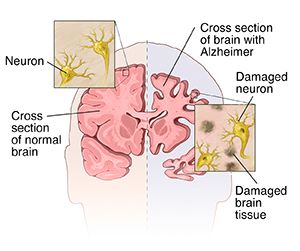
The review suggests that any measurable benefits fall “well below” what would be considered noticeable for most patients and families.

Debate Over Medical Progress

The findings highlight an ongoing divide in the scientific community. Some researchers describe the treatments as a major milestone in Alzheimer’s research, while independent analysts, including the Cochrane Collaboration, question their practical value.

Health visitor and a senior woman during home visit. A nurse talking to an elderly woman.

The Cochrane review analyzed data from more than 20,000 participants across multiple studies, concluding that benefits may not justify the risks and costs for many patients.

Safety and Cost Concerns

The report also raises concerns about side effects, including brain swelling and bleeding in some cases.

In addition, the treatments require regular infusions every two to four weeks and come with a high financial burden. An 18-month course is estimated to cost around £90,000, limiting access for many patients.

The NHS currently does not fund these treatments, citing cost-effectiveness concerns.

Expert Views Divided

Some experts involved in the review cautioned against widespread use of the drugs. Prof Edo Richard of Radboud University Medical Centre said many patients are unlikely to benefit and may face additional burden on themselves and their families.

Prof Robert Howard of University College London said the treatments had been “hyped” in a way not supported by strong evidence, potentially creating unrealistic expectations.

However, other scientists strongly disagreed with the conclusions. Prof Bart De Strooper of the UK Dementia Research Institute said the review may underestimate recent progress and add unnecessary doubt to ongoing research efforts.

Background on the Treatments

The drugs are among the first in history shown to slow the progression of Alzheimer’s in clinical trials. They work using engineered antibodies designed to target beta amyloid, a protein that accumulates between brain cells in patients with the disease.

Ongoing Debate

The findings highlight the continuing tension between cautious scientific evaluation and optimism around emerging Alzheimer’s therapies, as researchers work to balance innovation with proven clinical benefit.

You Might Also Like

UNESCO Sites Help Wildlife Recover, But New Report Warns of Rising Climate Threats

Has Prince Harry and Meghan Markle’s Australia Visit Failed to Improve Their Public Image?

The Drama Review: Robert Pattinson and Zendaya Star in a Divisive, Anxiety-Filled Film That Won’t Be for Everyone

Jacob Elordi and Kendall Jenner’s Friendship Turns Flirty as Romance Rumors Heat Up

Trump Says There Is “No Time Frame” for Iran Conflict as Ceasefire Talks Continue

TAGGED: trending
Henry Ortiz April 23, 2026 April 23, 2026
Leave a comment

Leave a Reply Cancel reply

Your email address will not be published. Required fields are marked *

Popular News
indian-cities-among-worlds-10-worst-polluted-after-diwali-festive-fireworks
India

Indian cities among world’s 10 worst polluted after Diwali festive fireworks

Lisa Sean Lisa Sean November 13, 2023
Italy bans production and sale of lab-grown meat, citing health concerns
Sarah Ferguson slams “grumpy princess” Meghan Markle
North Korea fires a medium-range ballistic missile: South Korea
China calls on Japan to reaffirm strategic relations in face-to-face rare leader talks

Categories

  • Market
  • Tech
  • Fitness
  • Food
  • Celebrity
  • Fashion
  • Beauty
  • Football
  • Cricket
  • Entertainment
    • Celebrity
    • Movies
    • Television
  • Style
    • Arts
    • Beauty
    • Fashion
  • Health
    • Fitness
    • Food
  • Sports
    • Baseball
    • Basketball
    • Cricket
    • Football
    • Olympics
  • Business
    • Market
    • Tech
Useful Links
  • About us
  • Privacy policy
  • Term Of Use

2023 © Distinct Post News & Media. All Rights Reserved.

Welcome Back!

Sign in to your account

Lost your password?